

Wet Belt Replacement in Whitstable & Canterbury
Specialist wet belt diagnosis and replacement across Ford EcoBoost, Peugeot/Citroën PureTech, Ford EcoBlue and other applications. Preventative replacement is the only way to avoid catastrophic engine damage — by the time you hear a symptom, it’s often too late.
What is a wet belt?
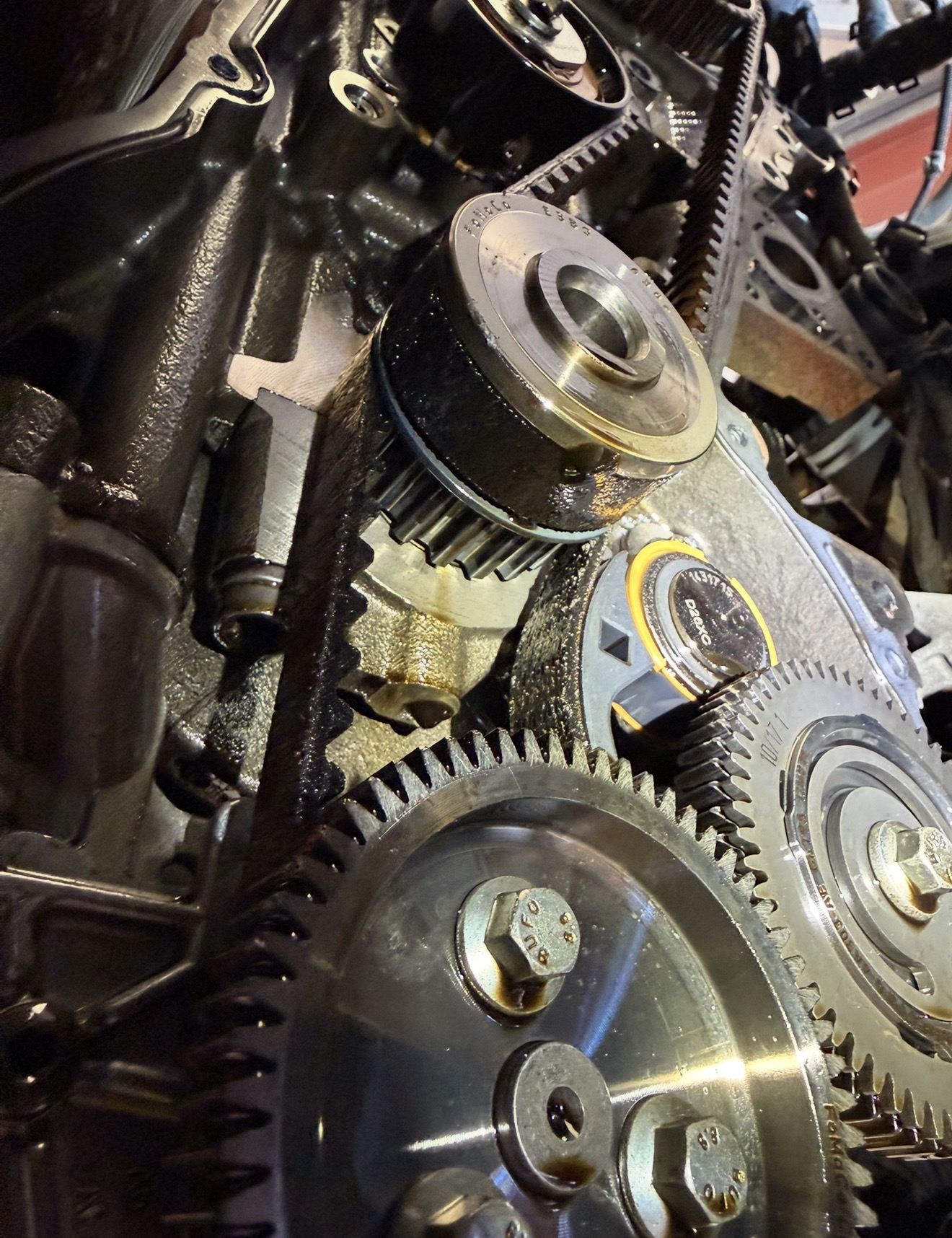
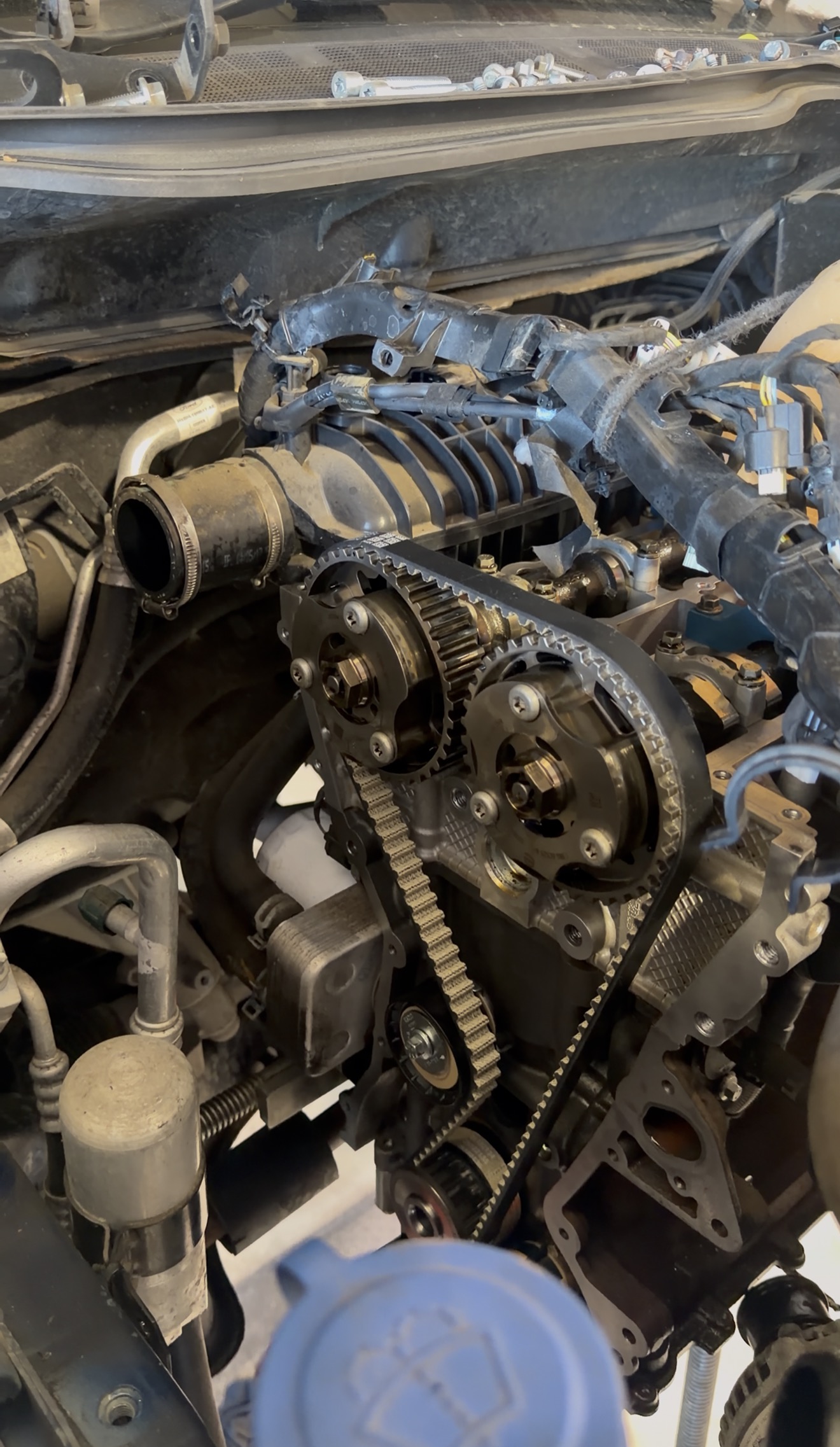
A wet belt is a timing belt that runs inside the engine, completely immersed in engine oil, rather than sitting externally like a conventional cambelt. Its job is to keep the crankshaft and camshaft synchronised — controlling when the valves open and close relative to the pistons. If the belt slips or breaks, the valves and pistons collide, and the engine is destroyed.
The “wet” design was adopted by several manufacturers from around 2012 onwards. Running the belt in oil reduces friction and noise, and allowed engineers to build smaller, lighter, more fuel-efficient engines to meet emissions targets. The trade-off is that the belt is constantly exposed to engine oil, and as it ages, the rubber compound degrades, softens, and starts to shed fragments into the oil system.
Those fragments circulate through the engine — blocking the oil pump pickup, contaminating the oil galleries, and starving critical components of lubrication. In many cases, this contamination is already underway before any visible symptoms appear. By the time you hear a noise or see a warning light, the damage may extend far beyond the belt itself.
Why wet belts fail
The belt material degrades from constant oil exposure over time. This is inevitable — the question is when, not if. Several factors accelerate the process:
Oil quality and service history
The belt relies on clean, correctly specified oil to stay in good condition. Missed services, extended oil change intervals, or the wrong oil specification all accelerate belt degradation. Cheap or incorrect oil is one of the biggest contributors to premature failure.
Short trips and cold starts
Engines that never reach full operating temperature — school runs, short commutes, city driving — put extra stress on the belt. The oil doesn’t get hot enough to burn off contaminants, and fuel dilution thins the oil further.
Age as much as mileage
Rubber degrades with time regardless of mileage. A belt on a low-mileage vehicle that’s ten years old can be in worse condition than one on a high-mileage vehicle that’s been serviced religiously with the correct oil.
The strainer gets blocked
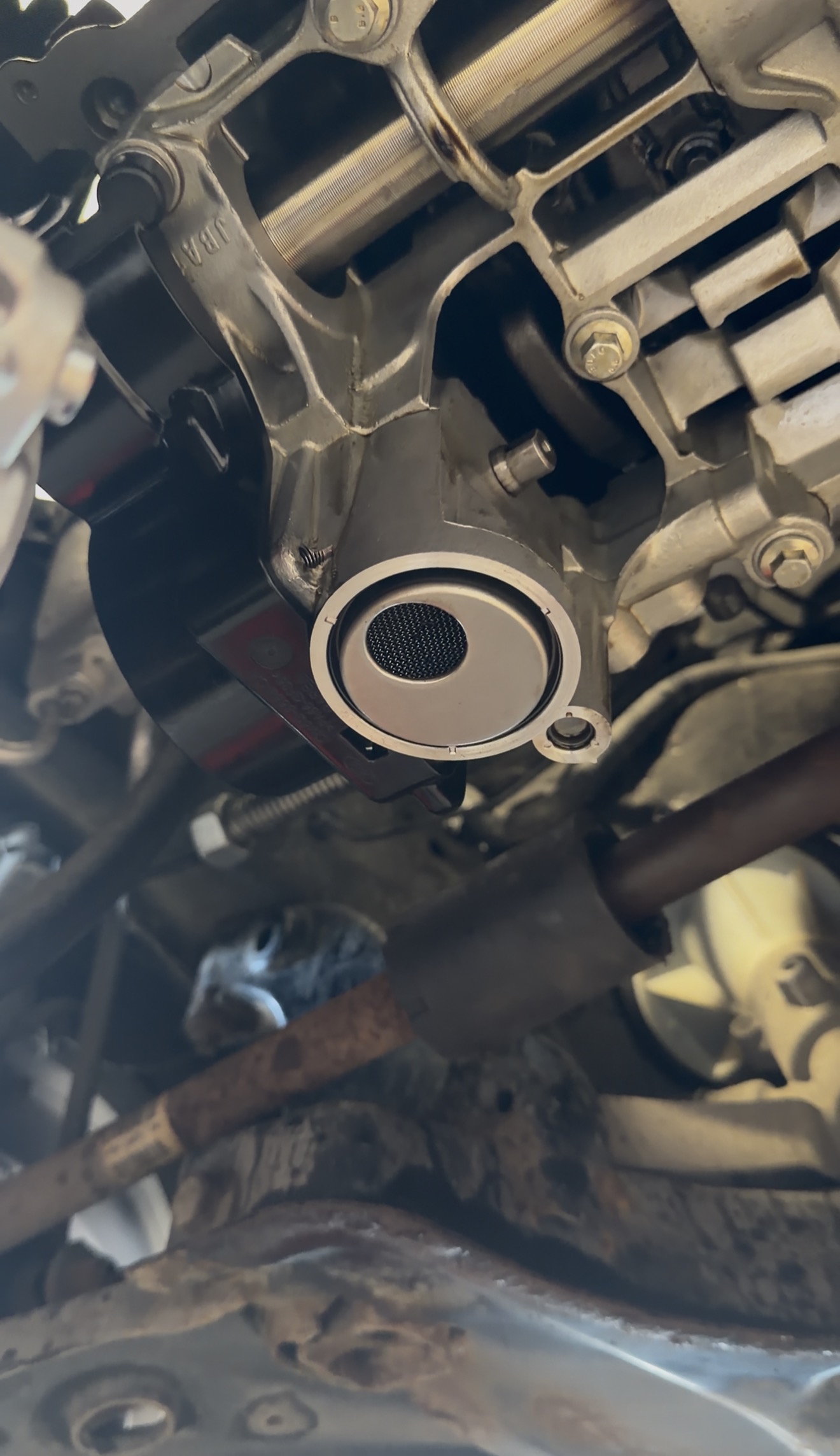
As the belt sheds material, fragments accumulate on the oil pump pickup strainer — the mesh filter that sits in the sump. Once this is partially blocked, oil flow to the engine is restricted. This is why every wet belt replacement at NMD includes removing, inspecting and cleaning the sump and strainer. Fitting a new belt without clearing the contamination defeats the purpose.
Warning signs of wet belt failure
Many wet belt failures happen with no warning at all — the engine runs normally one moment and is destroyed the next. But when symptoms do appear, they should be treated as urgent.
Engine management light
A persistent or intermittent engine light can indicate timing-related issues caused by a stretching or slipping belt.
Rattling or slapping noise
A rhythmic rattle, slap or whirr from the front of the engine, particularly on cold start-up. Indicates the belt is losing tension or shedding material.
Low oil pressure warning
Belt debris blocking the oil pump pickup or galleries can cause oil pressure to drop — a serious warning that needs immediate attention.
Rough idle or misfiring
A worn or stretched belt can cause engine timing to shift slightly, leading to rough running, hesitation or misfires.
Debris in the oil
Rubber particles, dark sludge or unusual texture noticed during a service or oil change. This means the belt is already shedding — act quickly.
No symptoms at all
The most common scenario before catastrophic failure. If your belt is approaching or past the replacement interval, don’t wait for a symptom.
Find your vehicle
We carry out wet belt replacement across all the common applications. Select your engine type below for vehicle-specific detail, or call us with your registration and we’ll confirm which service applies.
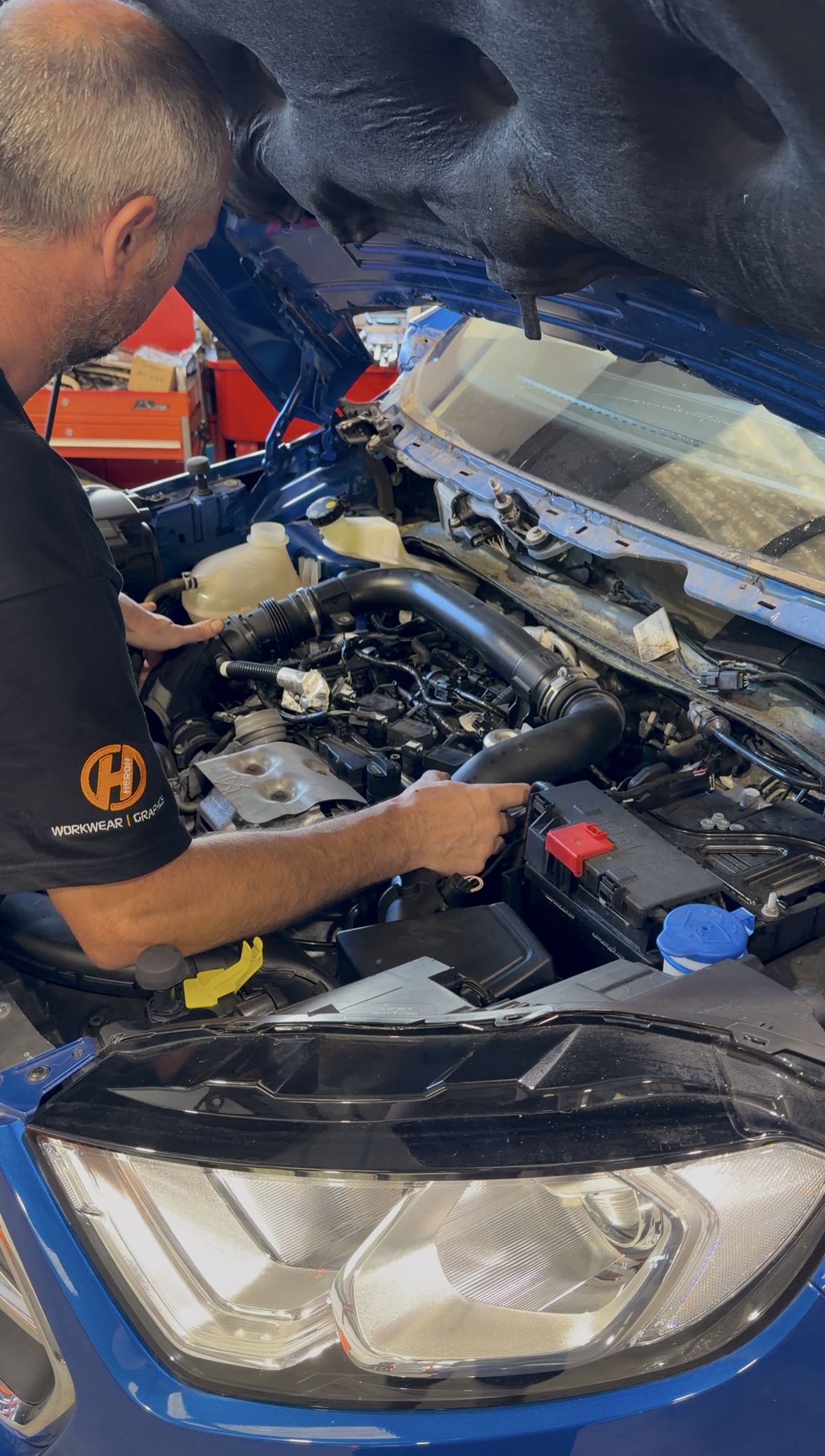
Ford EcoBoost Wet Belt
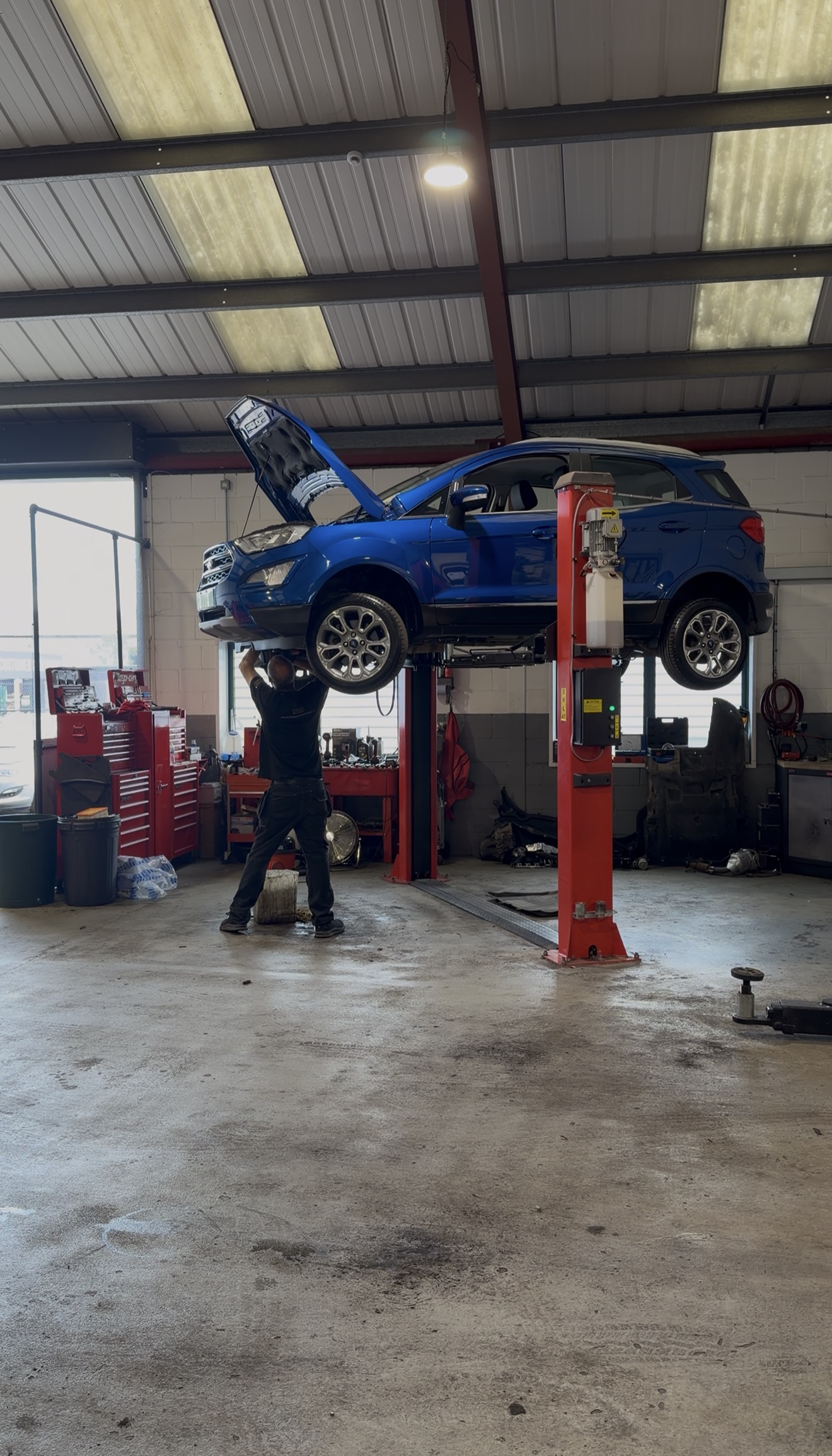
The belt-in-oil design that started the wet belt conversation. Genuine Ford parts used on every job.
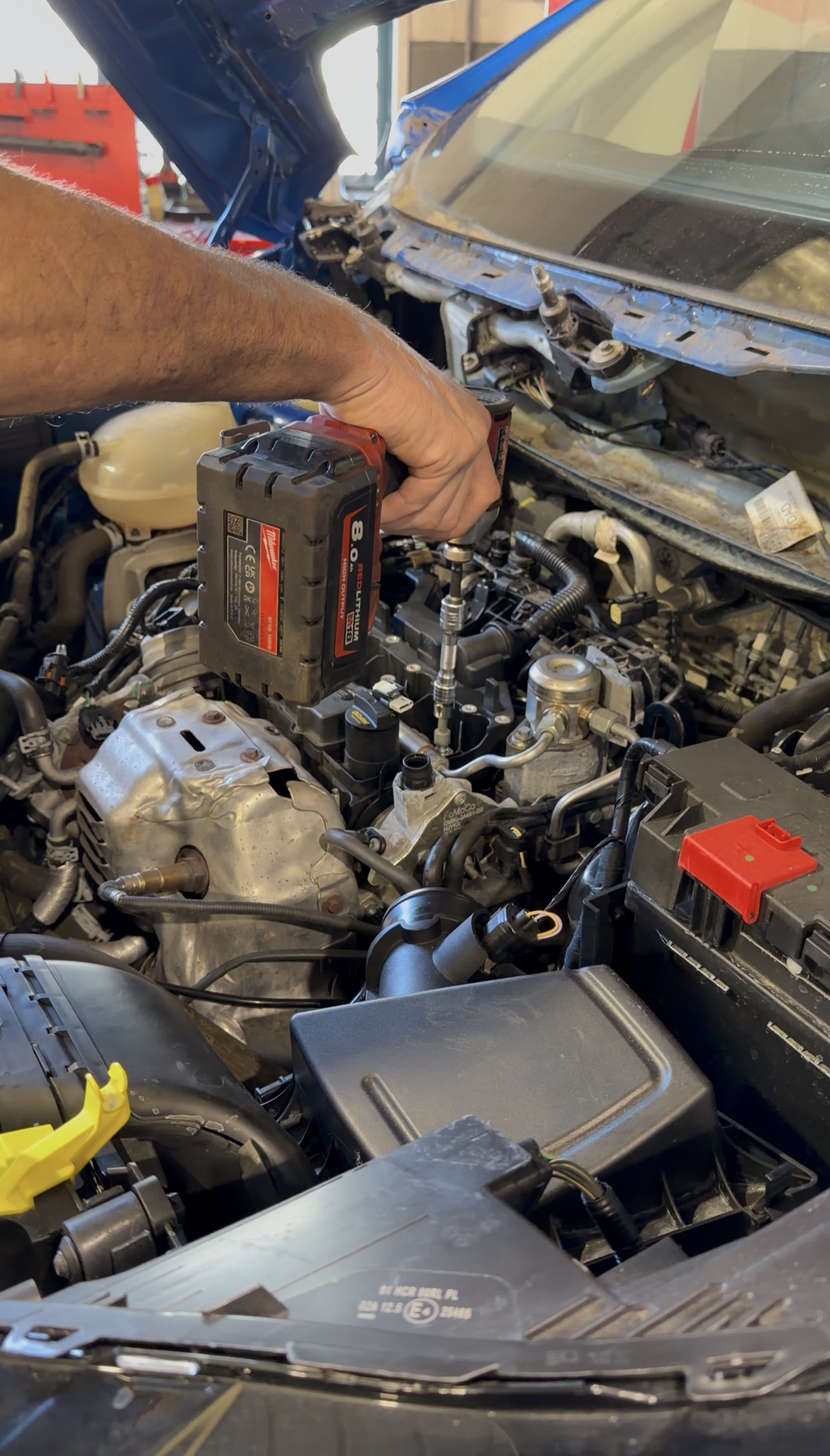
PureTech Wet Belt
One of the most widely reported timing failures on the road today. Affecting Peugeot, Citroën, Vauxhall and DS vehicles.
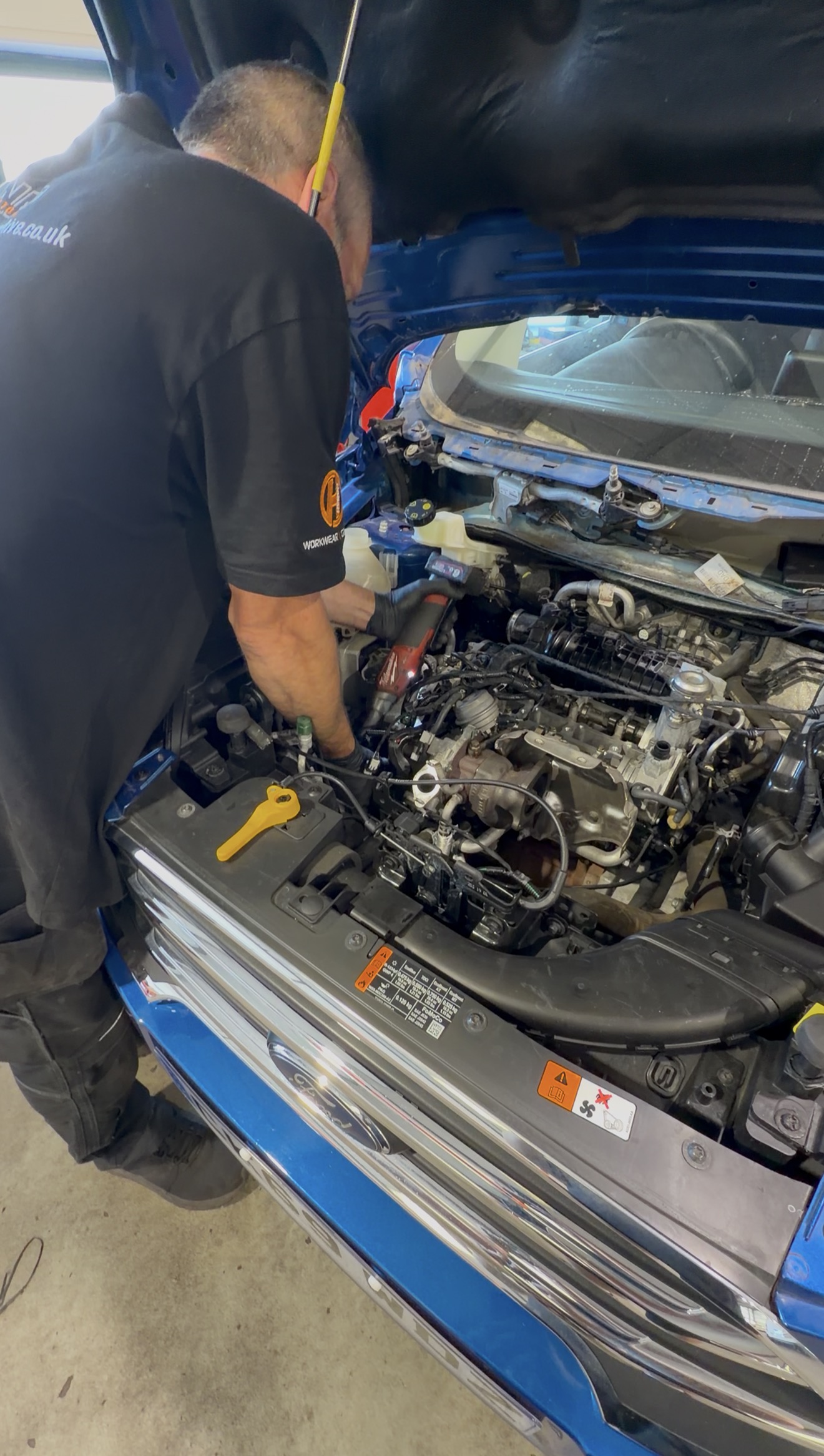
Ford EcoBlue Wet Belt
The commercial vehicle wet belt. Ranger and Transit owners — this is the one that affects your engine.
Not sure which engine you have?
Send us your registration on 01227 794 777 or WhatsApp and we’ll confirm which service applies to your vehicle — no obligation.
Our approach to wet belt replacement
Every wet belt job at NMD follows the same thorough process, regardless of vehicle. This isn’t a quick belt swap — it’s a full service of the timing system and oil circuit.
Confirm and quote
We verify your exact engine code and belt specification from the registration. You get a clear, fixed quote before any work begins.
Strip down and inspect
The timing cover is removed to access the wet belt. We inspect the belt condition, tensioner, and look for signs of debris already in the oil system.
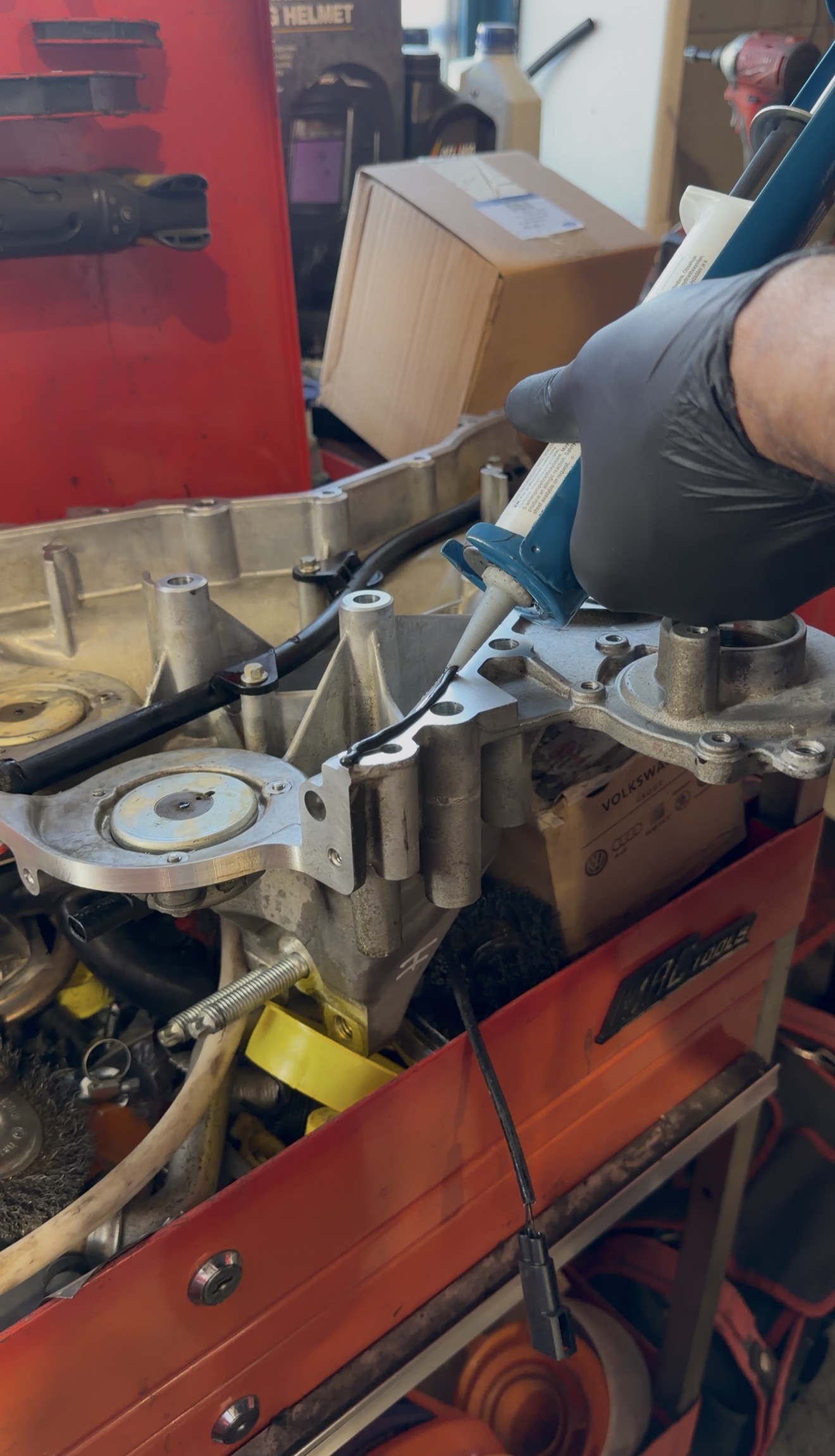
Oil system flush and sump clean
The sump is removed, inspected and thoroughly cleaned. The oil pump pickup and strainer are checked and cleaned to remove any belt debris. This step is critical — and it’s the step many garages skip.
Fit new components
New belt, tensioner and seals fitted. Engine timing set and verified. Fresh manufacturer-specification oil and new filter.
Test and confirm
Engine started, run to temperature, checked for leaks, and road tested. We photograph the old belt for your records so you can see the condition it was in.
What every wet belt replacement includes
Nothing is optional or extra unless we find additional damage during the strip-down, in which case we call you before proceeding.
✓ Correctly specified wet belt kit (belt, tensioner, seals)
✓ Sump removal, inspection and clean
✓ Oil pump pickup and strainer inspection and clean
✓ Oil system flush to clear belt debris
✓ Correct manufacturer-specification engine oil
✓ New oil filter
✓ All required seals and gaskets
✓ Engine timing set and verified
✓ Road test and final quality check
✓ Before-and-after photographs of the belt condition
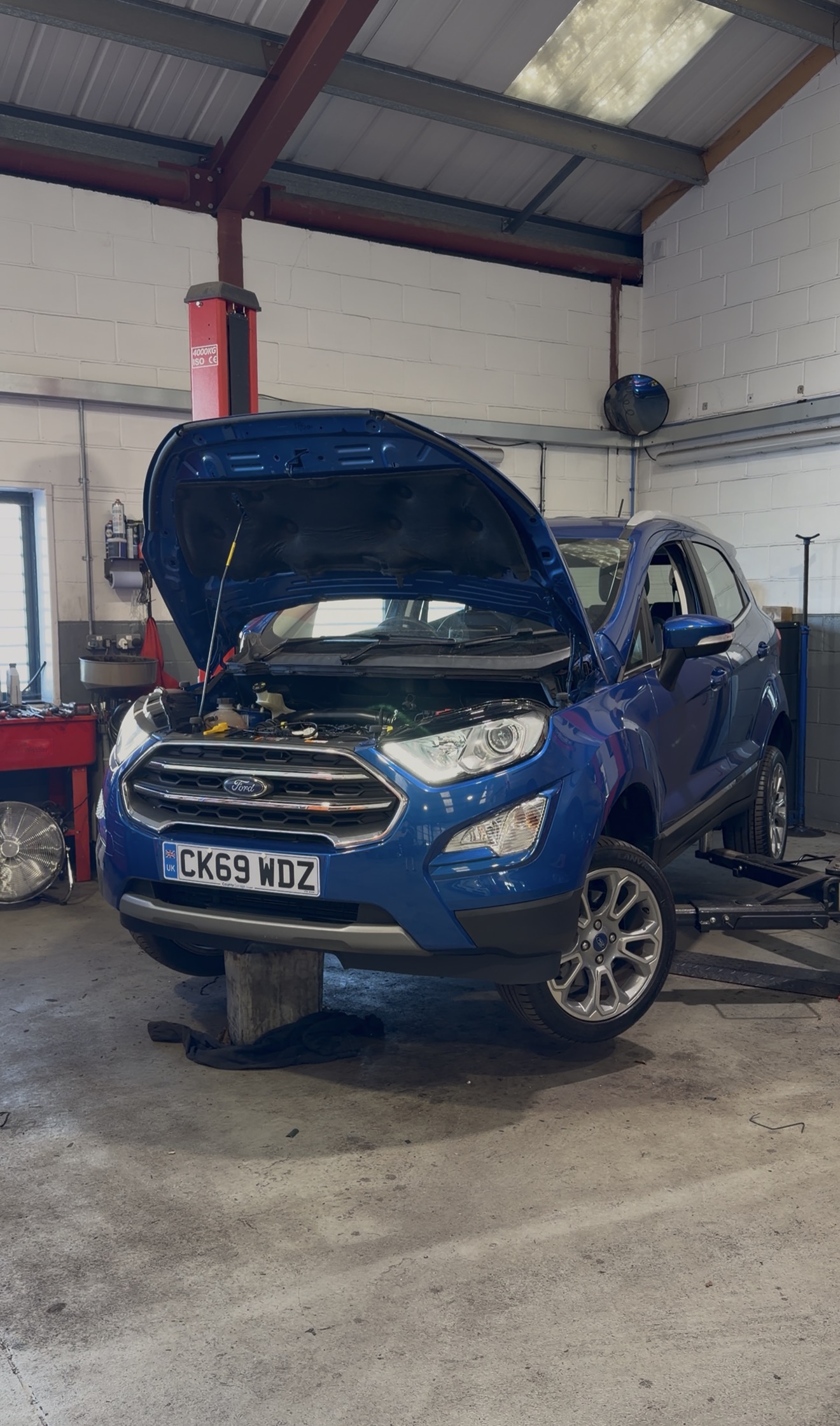
When should you replace your wet belt?
Manufacturer replacement intervals are typically quoted at 100,000–125,000 miles or 10 years. In practice, many specialists — ourselves included — recommend inspection or replacement significantly earlier.
We’ve seen belts that are visibly degrading at 50,000–60,000 miles, particularly on vehicles with irregular servicing, incorrect oil, or a pattern of short trips and cold starts. The belt is rated to last the full interval under ideal conditions — but ideal conditions rarely exist in the real world.
The cost of a preventative replacement is a fraction of the cost of engine damage. A new engine or a written-off vehicle versus a planned repair — the maths is straightforward.
Don’t know the belt’s history?
If you’ve bought the vehicle second-hand or can’t confirm when the belt was last done, we’d recommend having it inspected. Call us with your registration and mileage and we’ll advise whether it’s time to act.
Wet belt replacement questions
What is a wet belt?
How do I know if my car has a wet belt?
How much does wet belt replacement cost?
How long does it take?
Can I drive with a worn wet belt?
What happens if a wet belt snaps?
When should I replace my wet belt?
Do you use genuine parts?
Related services
We carry out wet belt replacements for customers across East Kent, including Whitstable, Canterbury, Herne Bay, Faversham, Tankerton, Seasalter, Blean, Sturry, Chartham, Hernhill, Boughton and surrounding areas.