

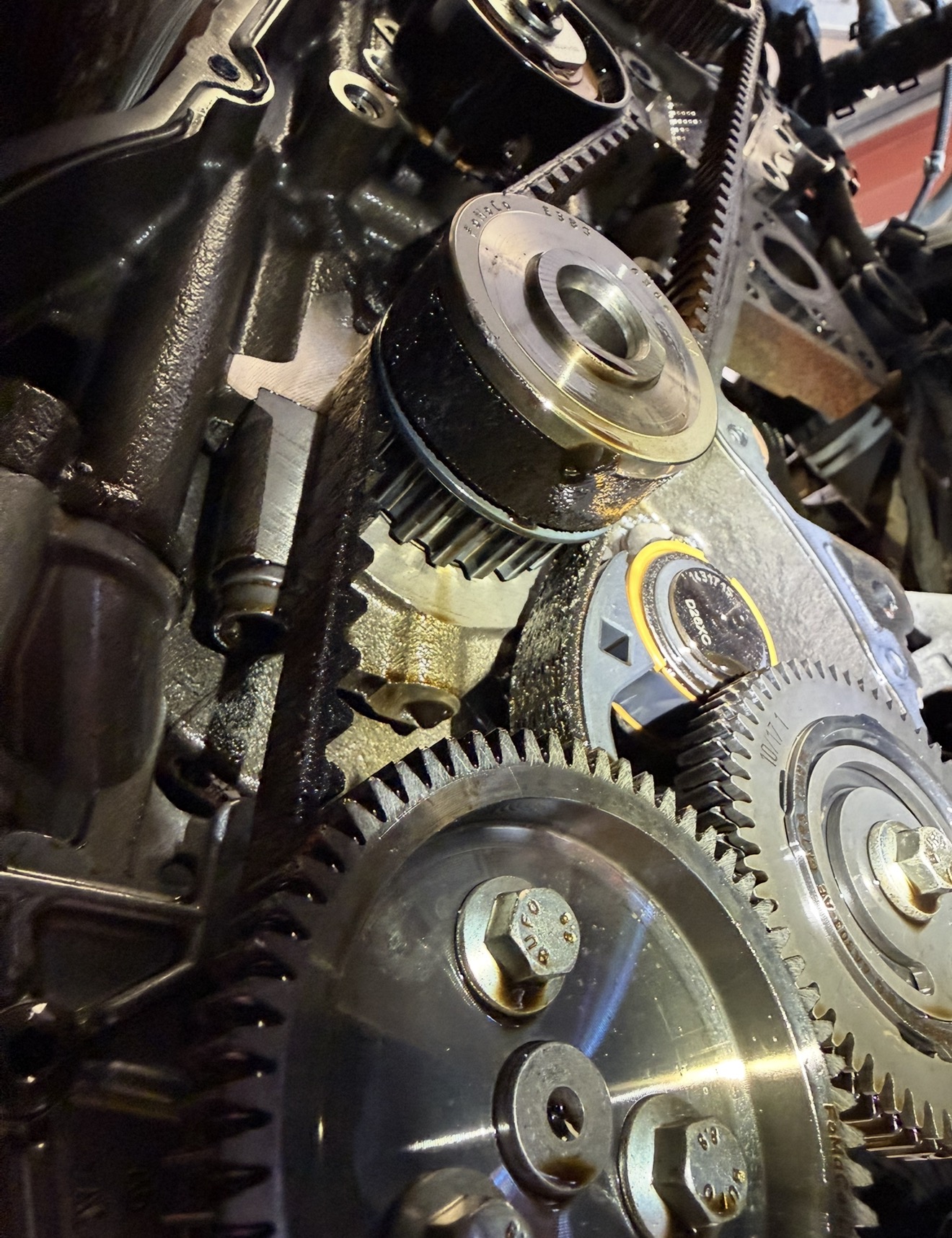
Ford EcoBoost Wet Belt Replacement
The 1.0 EcoBoost’s timing belt runs inside the engine, immersed in oil. When it fails, it takes the engine with it — usually without warning. We replace these using genuine Ford main dealer parts, before that happens.
Which vehicles does this cover?
The 1.0-litre EcoBoost three-cylinder engine has been fitted across Ford’s smaller models since around 2012. It’s one of the most widely sold engines on UK roads — and one of the most commonly affected by wet belt failure. If your vehicle is listed below, this service applies to you.
Ford Fiesta — 1.0 EcoBoost (2012 onwards)
Ford Focus — 1.0 EcoBoost (2012 onwards)
Ford Puma — 1.0 EcoBoost (2019 onwards)
Ford EcoSport — 1.0 EcoBoost
Ford B-Max — 1.0 EcoBoost
Not sure which engine you’ve got? Call us on 01227 794 777 with your registration and we’ll confirm before you book anything.
Note: Later 1.0 EcoBoost engines (broadly 2019+ depending on model) were revised to use a timing chain instead of a wet belt. We’ll confirm which your vehicle has from the registration number.
Why the EcoBoost wet belt fails
Unlike a conventional timing belt that sits at the front of the engine in open air, the 1.0 EcoBoost’s belt runs inside the timing cover, completely immersed in engine oil. Ford designed it this way to reduce friction and noise — and it works well when the belt is fresh. The problem is what happens as it ages.
Over time, the rubber compound of the belt degrades from constant oil exposure. The material softens, starts to swell, and begins shedding small fragments into the oil system. Those fragments circulate through the engine before any visible symptoms appear — contaminating the oil pump pickup, the oil galleries, and the sump.
If the belt deteriorates enough to slip or snap, the crankshaft and camshaft lose synchronisation. On an interference engine like the EcoBoost, that means valves and pistons collide. The result is typically bent valves, damaged pistons, and in many cases an engine that’s beyond economical repair.
The critical point: this often happens with no warning at all. The engine runs normally one moment and is destroyed the next. That’s why preventative replacement matters — by the time you hear a noise or see a warning light, the damage may already be done.
Warning signs to watch for
Many wet belt failures happen without any prior symptoms. But when signs do appear, they’re worth acting on immediately — they indicate the belt is already degrading and contamination may be spreading through the oil system.
Engine management light
A persistent or intermittent engine light can indicate timing-related issues caused by a stretching or slipping belt.
Rattling or slapping noise
A rhythmic rattle, slap or whirr from the front of the engine, particularly on cold start-up. This can indicate the belt is losing tension or shedding material.
Low oil pressure warning
Belt debris blocking the oil pump pickup or oil galleries can cause oil pressure to drop — a serious warning sign that needs immediate attention.
Rough idle or misfiring
A worn or stretched belt can cause the engine timing to shift slightly, leading to rough running, hesitation or misfires.
Debris in the oil
Rubber particles, dark sludge or an unusual texture to the oil noticed during a service or oil change. This means the belt is already shedding.
No symptoms at all
This is the most common scenario before a catastrophic failure. If your belt is approaching or past the replacement interval, don’t wait for a symptom — book a check.
Genuine Ford main dealer parts
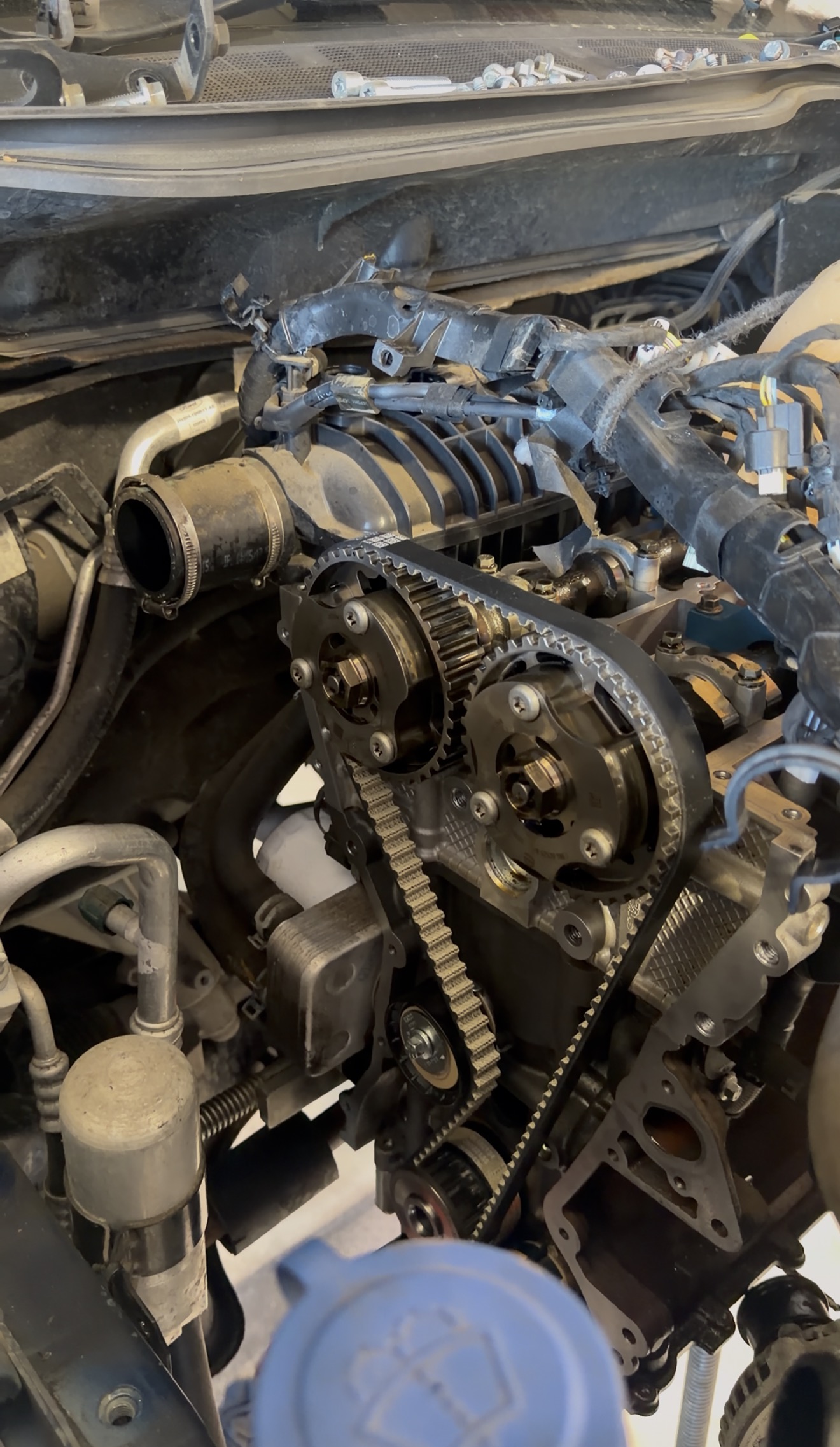
We use genuine Ford parts for every EcoBoost wet belt replacement — the same belt kit, tensioner, seals and components that a Ford main dealer would fit. Not aftermarket equivalents, not pattern parts — the real thing, sourced through the Ford parts supply chain.
This matters for two reasons. First, the belt material and tensioner calibration are engineered specifically for this engine and its oil environment — a cheaper belt may not have the same resistance to oil degradation. Second, if your vehicle is still under warranty or you’re maintaining a full Ford service history, genuine parts keep that record clean.
You get main dealer parts at independent garage pricing. The quality is identical; the overhead isn’t.
Our EcoBoost wet belt replacement process
Every job follows the same thorough process. This isn’t a quick belt swap — it’s a full service of the timing system and oil circuit.
Confirm engine and specification
We verify your exact engine code and belt specification from the registration number before ordering parts. The correct belt kit is sourced as genuine Ford components.
Strip down and access
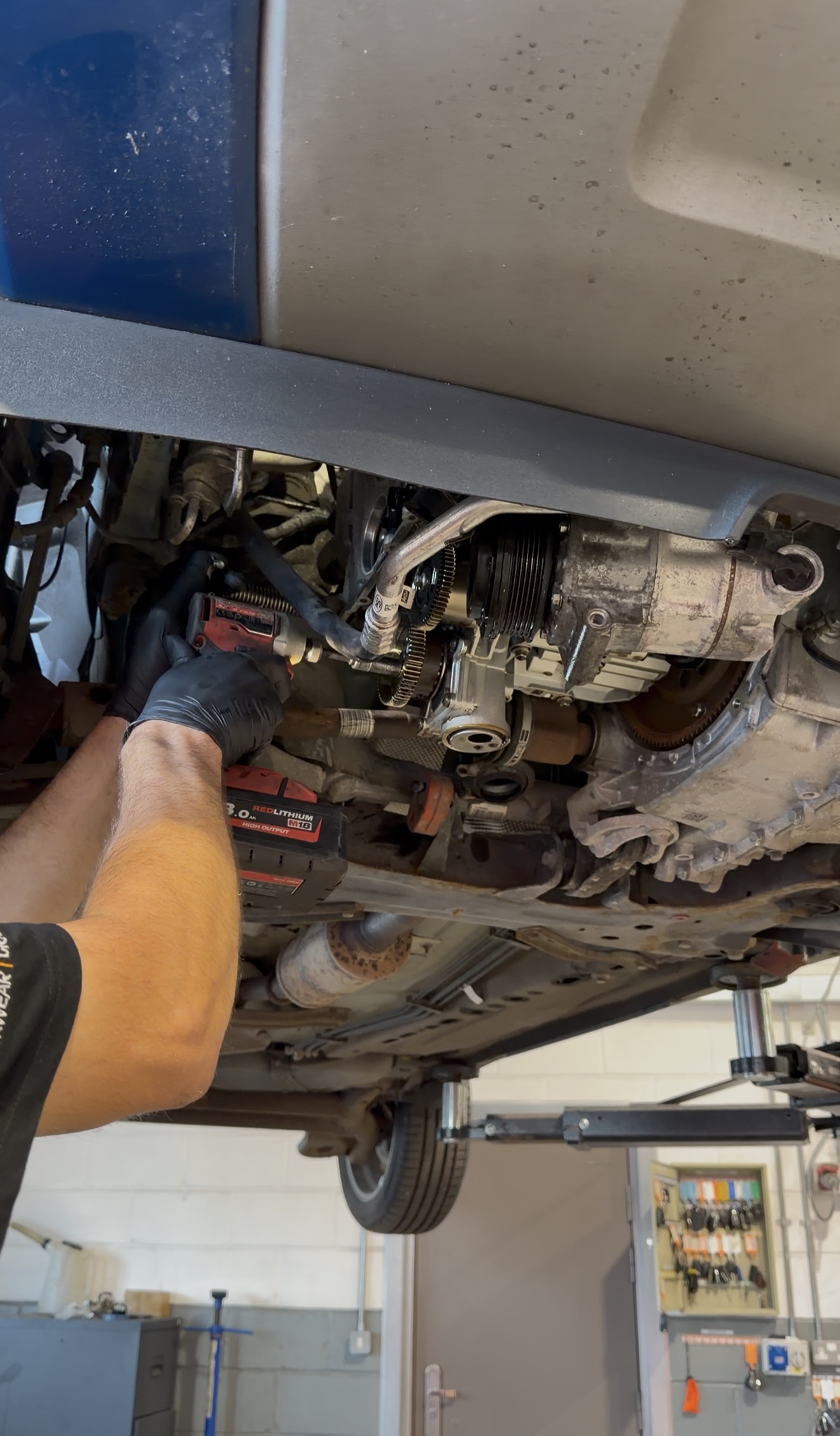
The timing cover is removed to access the wet belt system. We inspect the belt condition, tensioner, and look for signs of debris already in the oil circuit.
Remove old belt and components
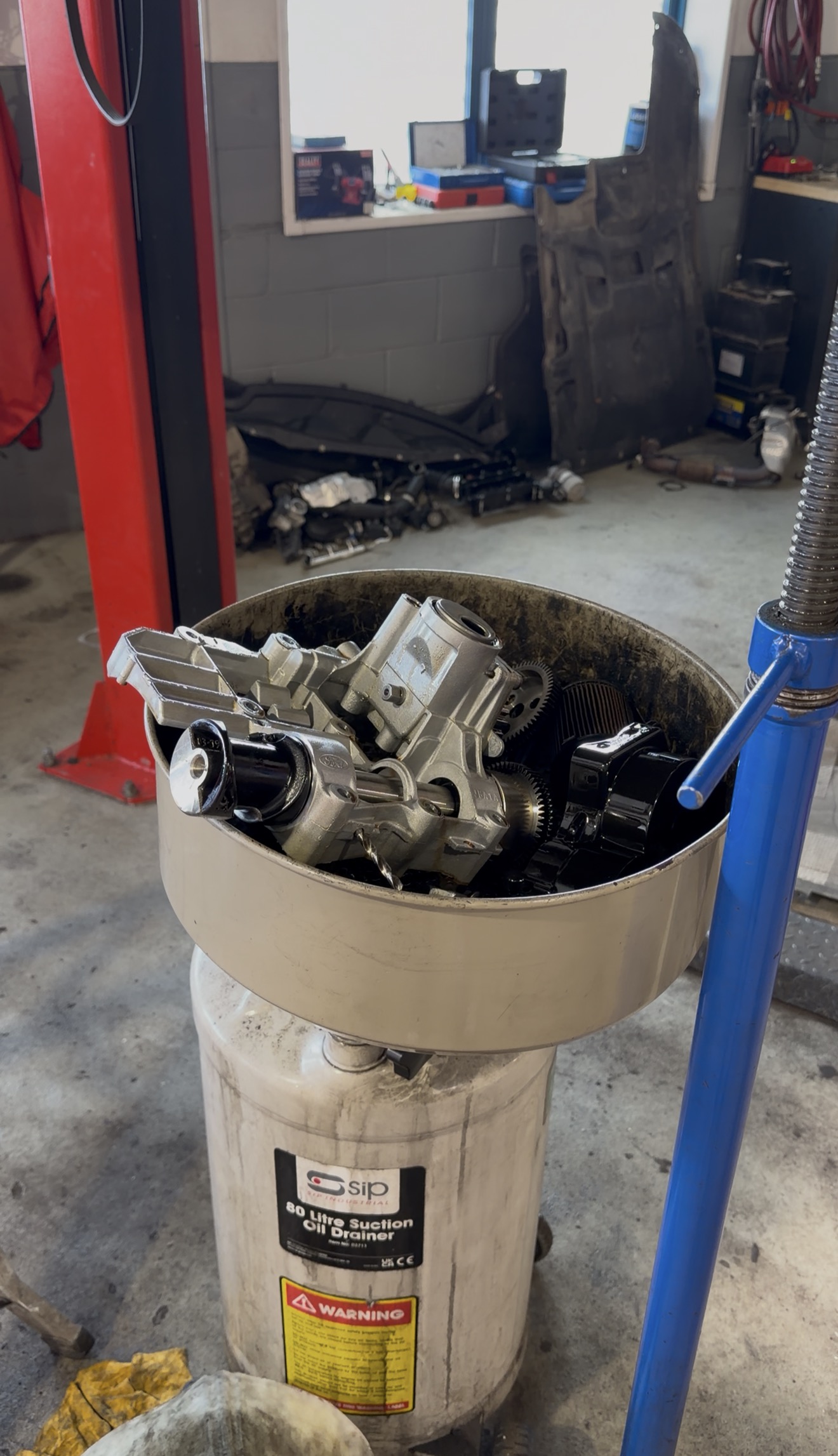
The old wet belt, tensioner and associated seals are removed. The old belt is inspected — if it’s already shedding material, we’ll show you and photograph it for your records.
Oil system flush and sump clean
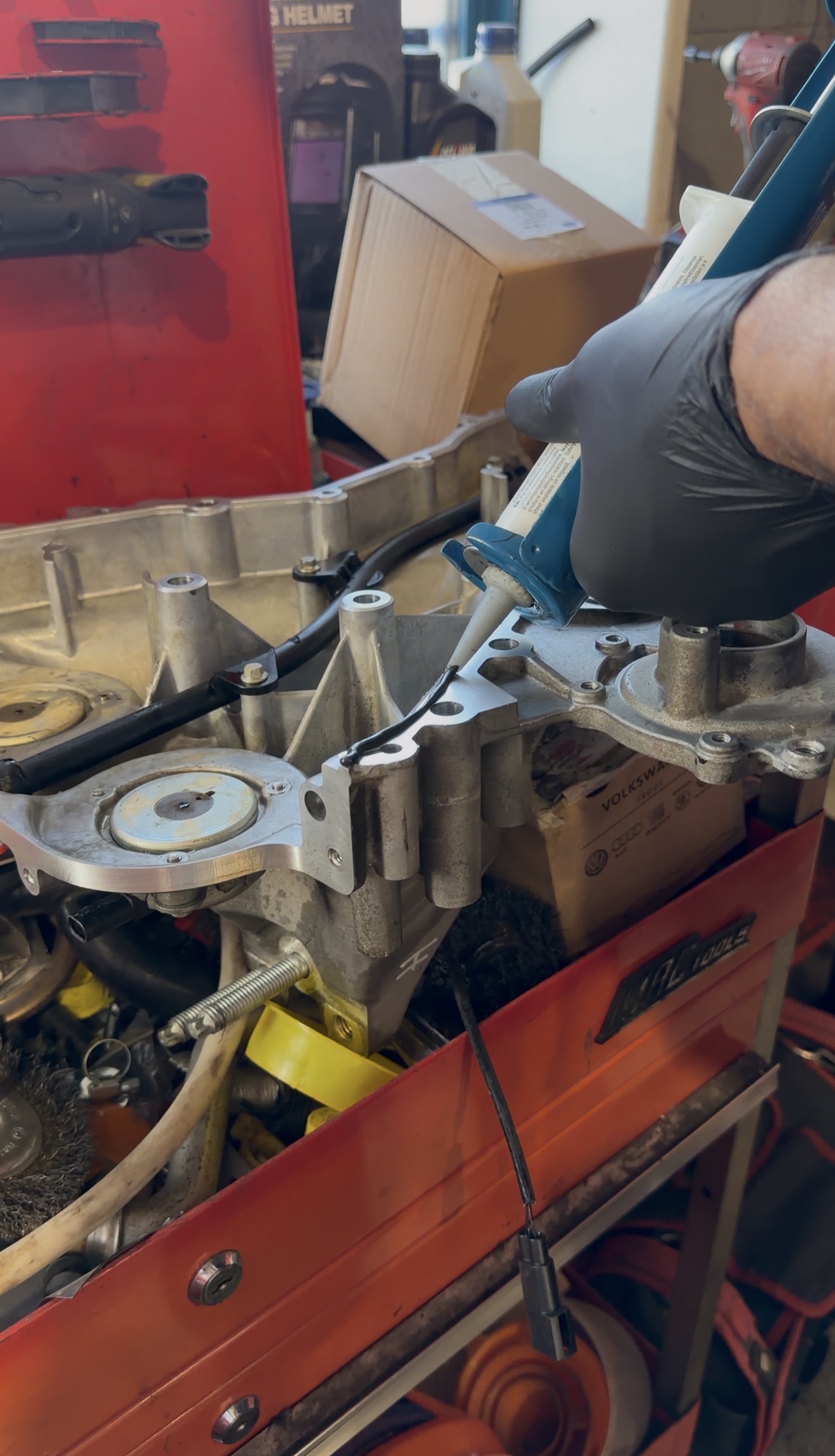
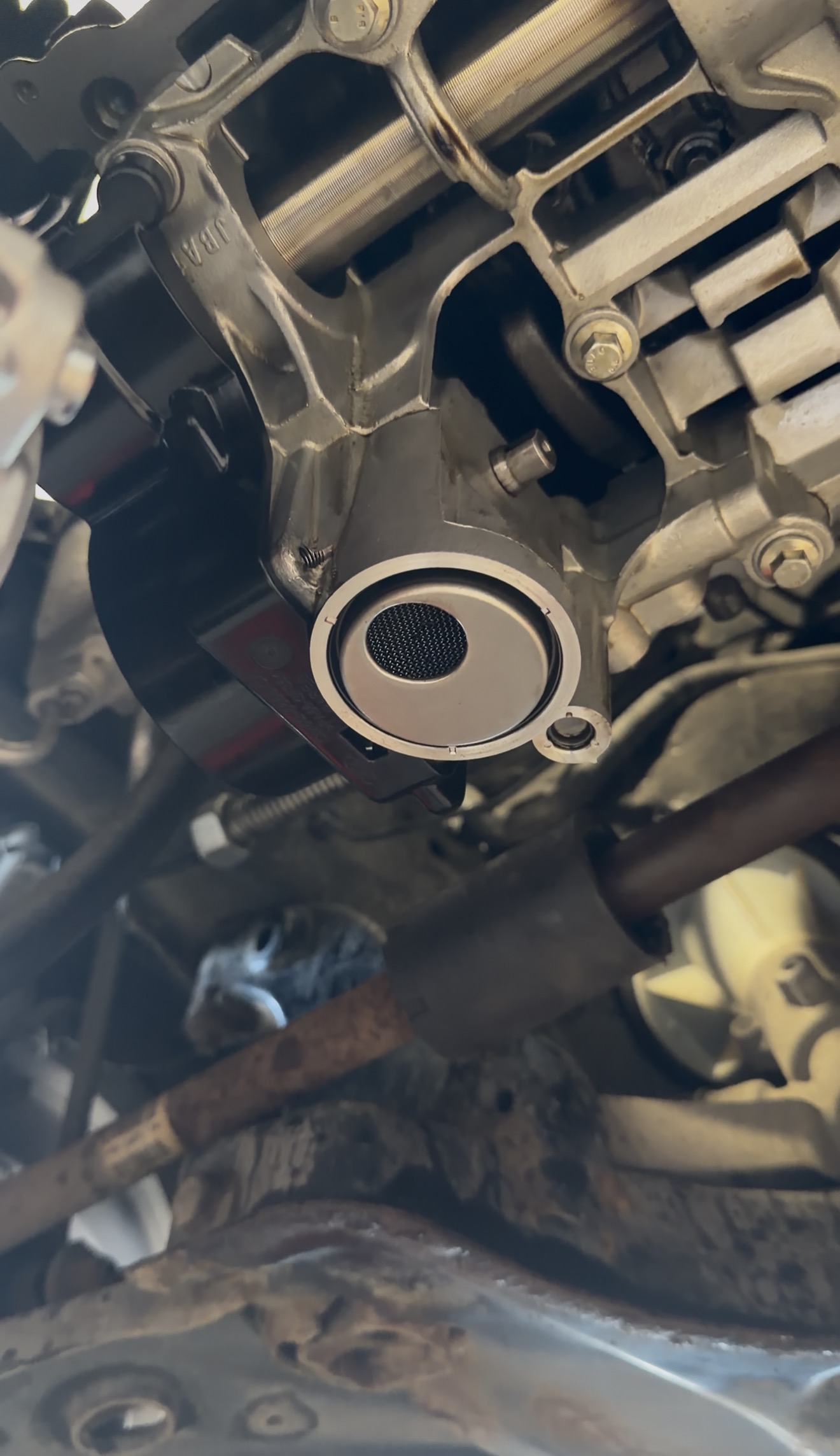
The sump is removed, inspected and cleaned. The oil pump pickup and strainer are checked and cleaned to remove any belt debris that’s already in the system. This step is critical — fitting a new belt without clearing the contamination defeats the purpose.
Fit new genuine Ford belt kit
New genuine Ford wet belt, tensioner and seals are fitted to the correct specification. Engine timing is set and verified before the cover goes back on.
Oil, filter and final checks
Fresh oil (correct Ford specification) and a new filter are fitted. The engine is started, run up to temperature, checked for leaks, and road tested to confirm everything is running correctly.
What’s included in every EcoBoost wet belt replacement
Every job includes the following as standard — nothing is optional or extra unless we find additional damage during the strip-down, in which case we’ll call you before proceeding.
✓ Genuine Ford wet belt kit (belt, tensioner, seals)
✓ Sump removal, inspection and clean
✓ Oil pump pickup and strainer inspection and clean
✓ Oil system flush to clear any belt debris
✓ Correct Ford-specification engine oil
✓ New oil filter
✓ All required seals and gaskets
✓ Engine timing set and verified
✓ Road test and final quality check
✓ Before-and-after photographs of the belt condition
When should you replace the EcoBoost wet belt?
Ford’s official replacement interval is typically quoted at around 100,000 miles or 10 years, whichever comes first. In practice, many specialists — ourselves included — recommend inspection or replacement from around 60,000 miles.
Why earlier? Because we’ve seen belts that are visibly degrading well before 100,000 miles, particularly on vehicles with irregular servicing, incorrect oil specification, or a pattern of short trips and cold starts. The belt is rated to last to the interval under ideal conditions — but ideal conditions include perfect oil changes at the right intervals with the exact right oil. In the real world, that doesn’t always happen.
The cost of a preventative replacement is a fraction of the cost of engine damage if the belt fails. A new engine or a written-off vehicle versus a planned repair — the maths is straightforward.
Not sure when yours was last done?
If you’ve bought the vehicle second-hand or don’t have a clear service history, we’d recommend having the belt inspected. Call us with your registration and mileage and we’ll advise whether it’s worth checking.
Ford EcoBoost wet belt questions
How much does EcoBoost wet belt replacement cost?
How long does it take?
Do I need to wait for symptoms before replacing it?
Does my Ford have a wet belt or a timing chain?
What parts do you use?
What happens if the wet belt has already started shedding?
Can I drive my car if I think the wet belt is failing?
Do you offer a warranty on the work?
Other wet belt services
We carry out Ford EcoBoost wet belt replacements for customers across East Kent, including Whitstable, Canterbury, Herne Bay, Faversham, Tankerton, Seasalter, Blean, Sturry, Chartham, Hernhill, Boughton and surrounding areas.