

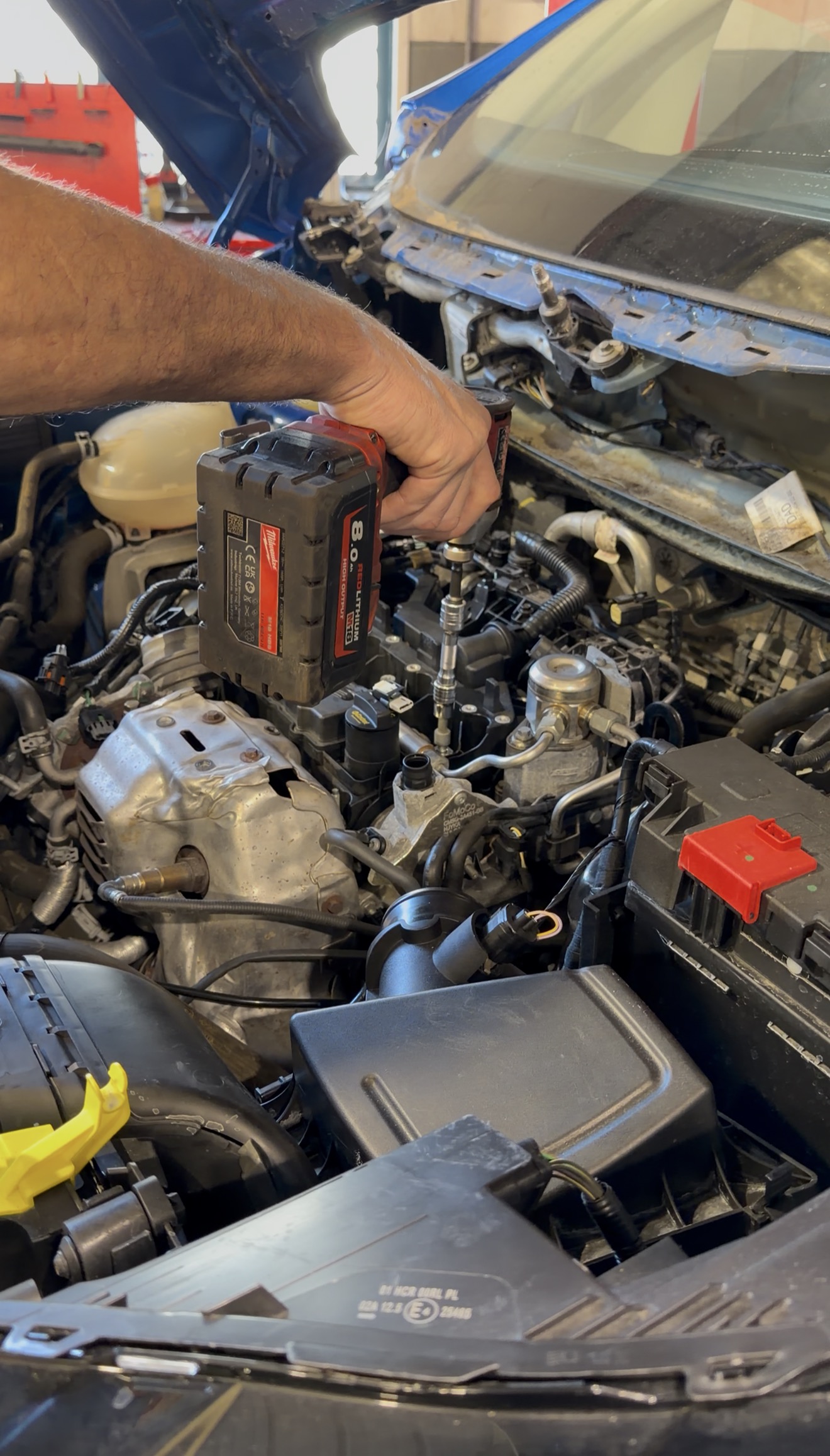
Ford EcoBlue Wet Belt Replacement
The 2.0 EcoBlue diesel uses a wet belt system — and for Ranger and Transit owners covering serious mileage, that belt is on a countdown. We replace these using genuine Ford main dealer parts before failure puts your vehicle off the road.
Which vehicles does this cover?
The 2.0-litre EcoBlue is Ford’s current-generation diesel engine, fitted across their commercial and passenger vehicle range. Unlike the petrol EcoBoost, this is a four-cylinder diesel — and it’s the engine powering a large proportion of the UK’s working van and pickup fleet. If your vehicle is listed below, this service applies.
Ford Ranger — 2.0 EcoBlue (single and bi-turbo)
Ford Transit — 2.0 EcoBlue
Ford Transit Custom — 2.0 EcoBlue
Ford Focus — 1.5 / 2.0 EcoBlue
Ford Kuga — 1.5 / 2.0 EcoBlue
Ford Puma — 1.5 EcoBlue
Ford EcoSport — 1.5 EcoBlue
Not sure which engine you’ve got? Call us on 01227 794 777 with your registration and we’ll confirm before you book.
Why the EcoBlue wet belt matters — especially for commercial use
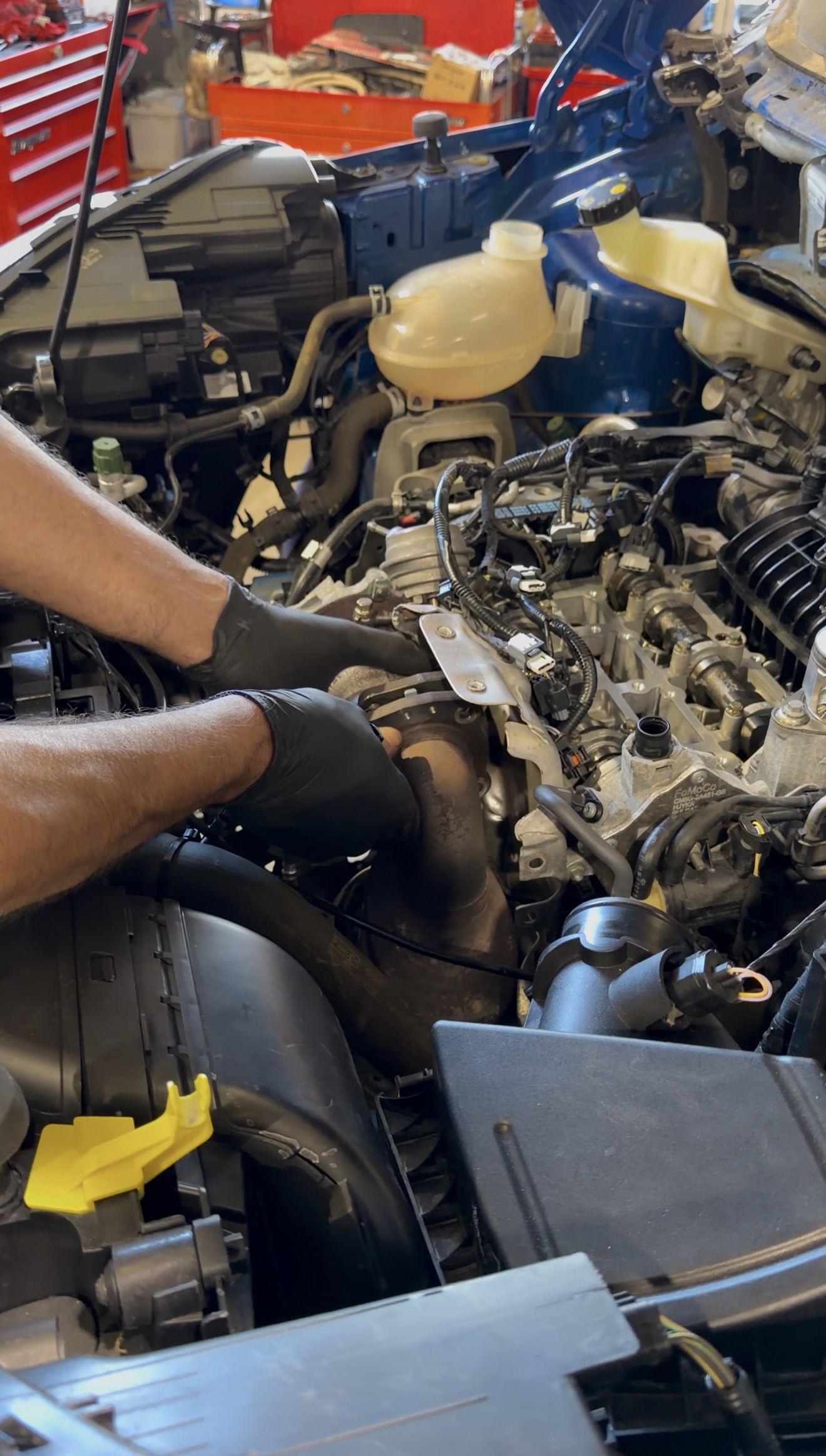
The EcoBlue uses the same wet belt concept as the petrol EcoBoost — a timing belt running inside the engine, immersed in oil. The failure mode is the same: the belt degrades, sheds material into the oil system, contaminates the pickup strainer, and eventually fails catastrophically.
What makes the EcoBlue different is context. Rangers and Transits are working vehicles. They cover high mileage, carry heavy loads, and are often the backbone of a business. A wet belt failure doesn’t just mean a repair bill — it means a vehicle off the road, jobs missed, customers let down, and potentially a recovery from wherever the engine decided to give up.
For fleet operators running multiple EcoBlue vehicles, this is a maintenance item that needs proactive management. We work with several local businesses to track mileage and schedule replacements before they become emergencies.
Towing and heavy use accelerates wear
Rangers towing trailers, Transits loaded to capacity, vehicles doing regular motorway miles under load — all of this increases the heat and stress on the belt and oil system. If your EcoBlue is working hard, the replacement interval may need to come forward.
Warning signs on EcoBlue engines
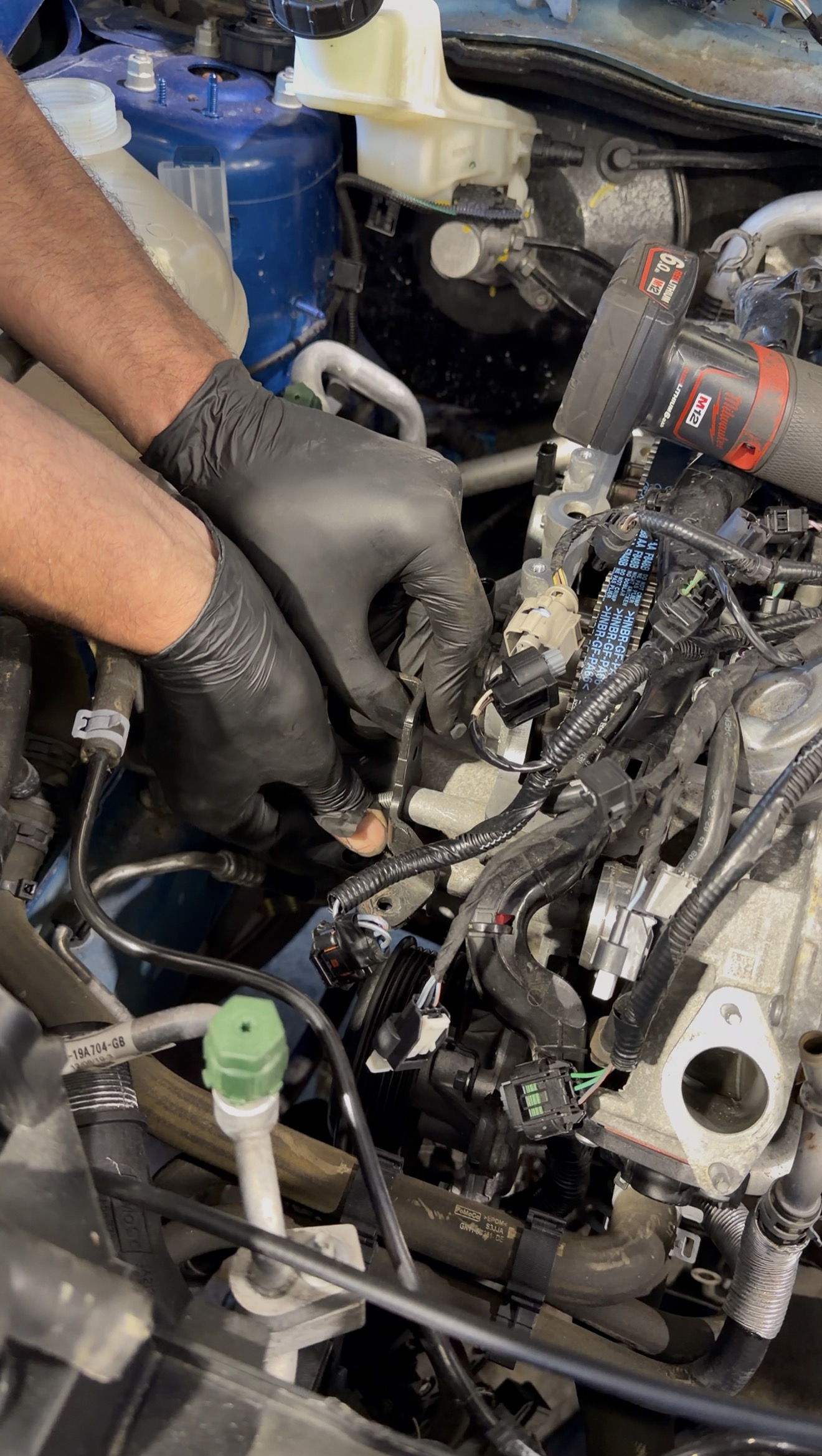
The symptoms are similar to the EcoBoost, but diesel owners should be particularly alert to oil-related warnings given the higher oil volumes and pressures involved.
Engine management light
Persistent or intermittent. On a diesel EcoBlue, this can indicate timing drift, injector timing issues, or oil pressure problems — all potentially linked to belt wear.
Rattling or whining on start-up
A rattle, whine or slapping noise from the front of the engine on cold start. Often brief and easy to dismiss — but it shouldn’t be there.
Low oil pressure warning
Belt debris restricting the oil pump pickup. On a diesel engine under load, oil pressure loss is critical — act immediately.
Loss of power
Timing drift from a worn belt affects injection timing on a diesel, which directly impacts power delivery and fuel efficiency.
Increased fuel consumption
Diesel engines are sensitive to timing accuracy. Even a small drift from belt wear can increase fuel consumption noticeably — particularly relevant on high-mileage commercial vehicles.
No warning at all
As with all wet belts, sudden failure without prior symptoms is common. Commercial vehicles covering high mileage reach the replacement interval faster — don’t assume it’s “too early.”
Genuine Ford main dealer parts
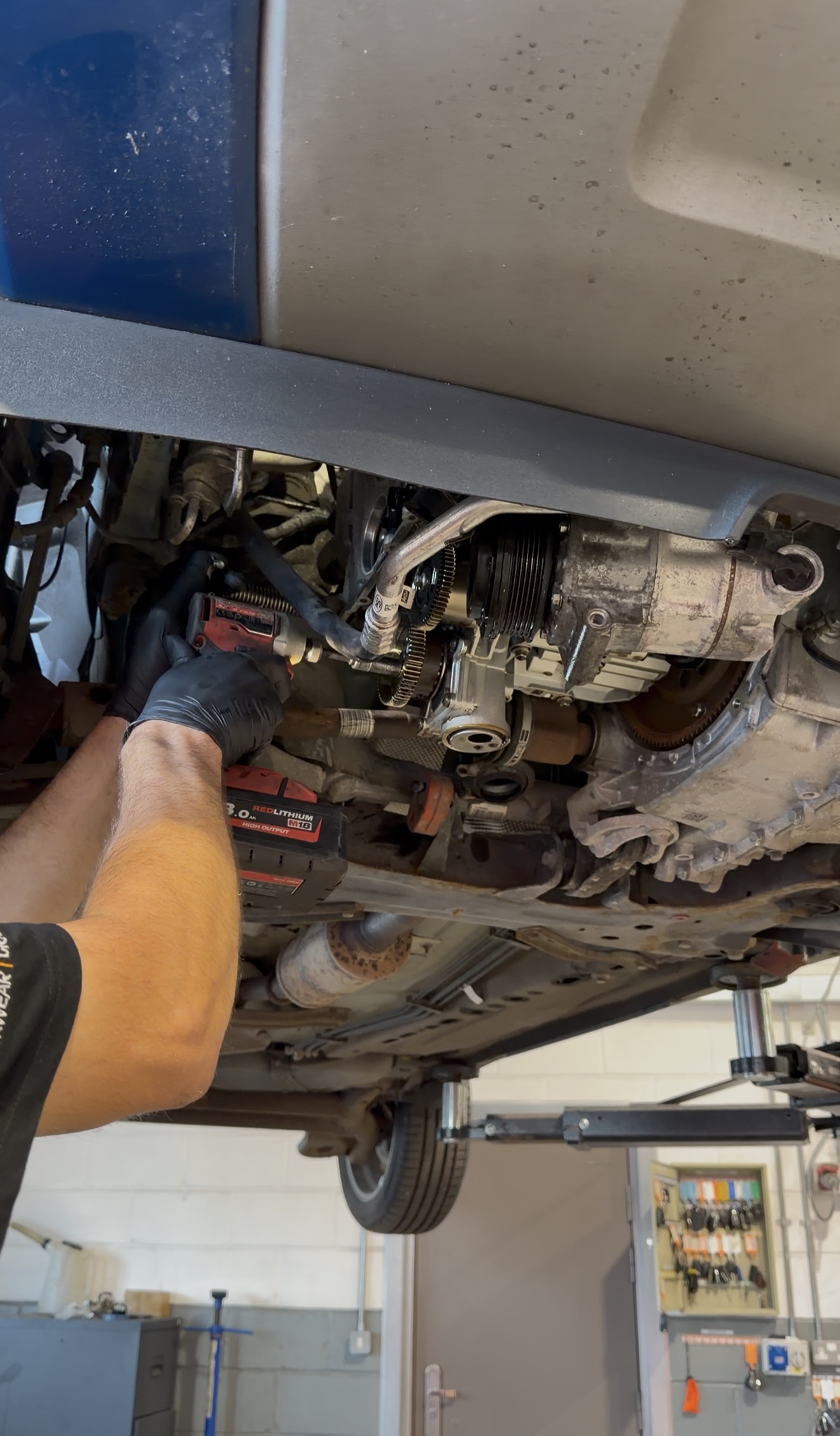
As with our EcoBoost wet belt service, we use genuine Ford parts for every EcoBlue replacement — the same belt kit, tensioner, seals and components that a Ford main dealer would fit.
On a diesel engine that’s expected to cover 150,000+ miles in commercial use, the quality of the replacement belt matters. A cheaper aftermarket belt may not have the same oil resistance or tensile strength as the genuine article. We don’t take that risk with your engine.
You get main dealer parts at independent garage pricing. Same quality, without the dealer overhead.
What’s included in every EcoBlue wet belt replacement
The same thorough process as our EcoBoost service, adapted for the diesel application:
✓ Genuine Ford wet belt kit (belt, tensioner, seals)
✓ Sump removal, inspection and thorough clean
✓ Oil pump pickup and strainer inspection and clean
✓ Oil system flush to remove belt debris
✓ Correct Ford-specification diesel engine oil
✓ New oil filter
✓ All required seals and gaskets
✓ Engine timing set and verified
✓ Road test under load where possible
✓ Before-and-after photographs of belt condition
When should you replace the EcoBlue wet belt?
Ford’s recommended interval applies, but commercial vehicles often reach the mileage threshold much faster than passenger cars. A Transit or Ranger covering 25,000–30,000 miles a year will hit the replacement window in 3–4 years rather than 10.
If your EcoBlue is approaching 80,000 miles and the belt hasn’t been done, it’s time to have it checked. For vehicles under heavy commercial use — towing, loaded, high-mileage — consider moving that threshold forward.
Fleet operators
If you’re running multiple EcoBlue vehicles, we can track mileage across your fleet and schedule replacements proactively. One less thing to manage, and no risk of a vehicle going down unexpectedly. See our fleet maintenance page for more.
Ford EcoBlue wet belt questions
How much does EcoBlue wet belt replacement cost?
How long does it take?
Is the EcoBlue wet belt the same as the EcoBoost wet belt?
My Transit does high mileage — when should the belt be done?
Can you do this for our fleet vehicles?
What parts do you use?
Does my Ranger have a wet belt?
Other wet belt services
We carry out Ford EcoBlue wet belt replacements for customers across East Kent, including Whitstable, Canterbury, Herne Bay, Faversham, Tankerton, Seasalter, Blean, Sturry, Chartham, Hernhill, Boughton and surrounding areas.